
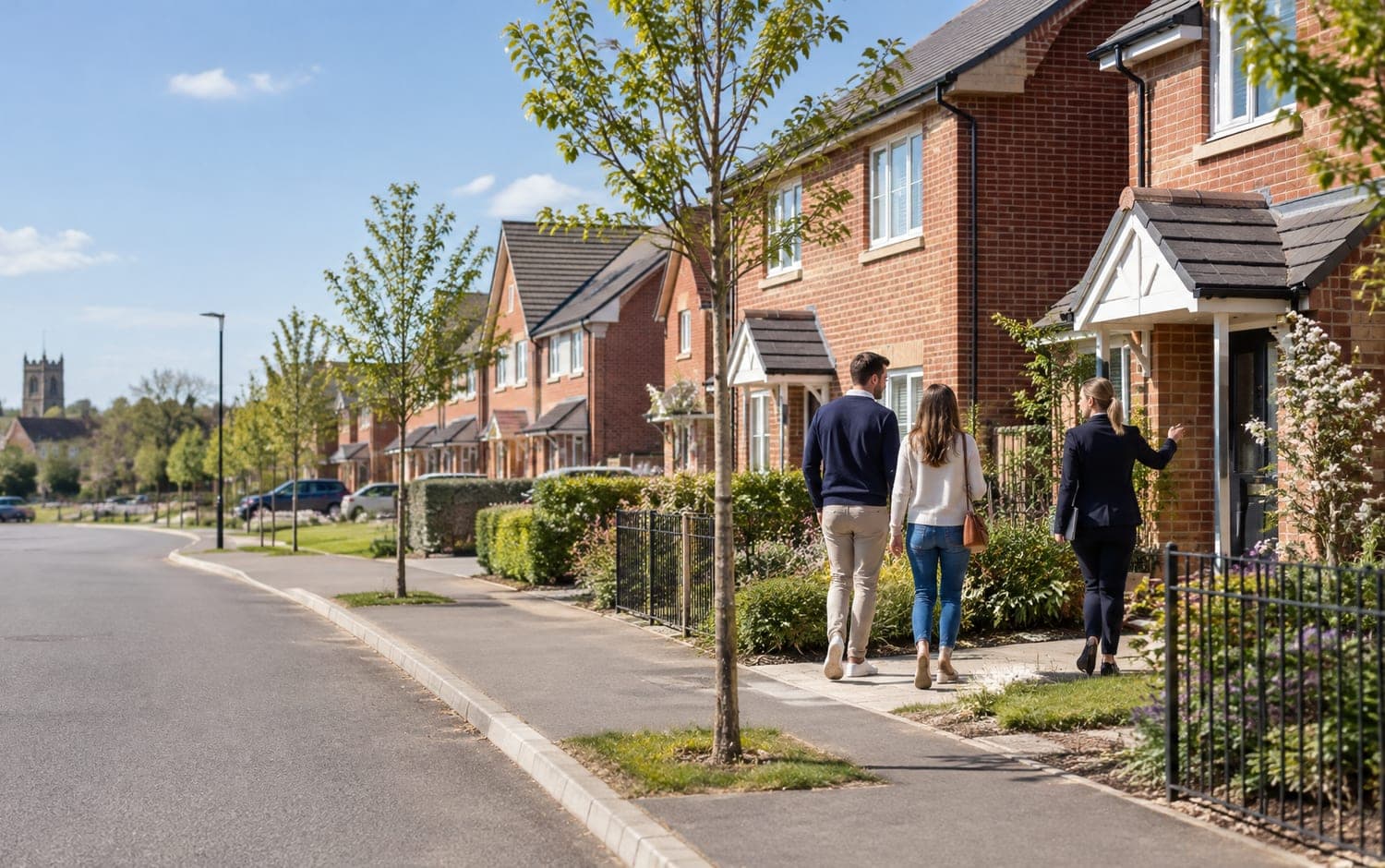
Sell the new homes to the town they are being built in.
Most people who buy on a new development already live nearby. Put the show-home opening, the launch weekend and the part-exchange offer on the screens in the town's cafés, gyms and supermarkets — and pay only for plays that genuinely happened.
Free account, no minimum spend, no contract. You pay for verified plays and nothing else.
The gap
Site hoardings only reach people who drive past the site.
A hoarding on the development and a listing on the property portals reach people already looking. The couple renting across town who could be persuaded to buy — the buyers a launch needs — are in the café, the gym and the supermarket, and they are not searching yet.
On the screens
What you would actually run.
Upload artwork you already have, or make it here — a poster costs 5 credits and a five-second clip 30.
The show home opening
The date, the address and a photograph of the finished interior.
The launch weekend
What is being released, from what price, and a QR code on the poster to book a viewing.
Part exchange and incentives
The offer that moves a hesitant buyer, stated plainly and accurately.
Progress on site
Photographs of the development taking shape. Buyers like to watch it happen.
How buying works at your scale
Bought the way you already work.
Target the surrounding towns
Filter by distance from the development and select cafés, gyms, supermarkets and family venues across the catchment.
Several sites, one account
Run a campaign per development, each with its own catchment, creative and budget.
Rent screens for the launch
For a launch weekend, rent individual screens outright so they show only your content.
Pay by invoice
Buy credits by invoice with 14-day terms and the VAT itemised.
What it costs
A campaign this size, priced out in full.
Thirty venues within five miles of a development, for the six weeks around a launch.
There is no platform fee on top and no monthly charge. 70% of what you pay reaches the venue already set, so the figure below is the whole cost.
Budget
3,000 credits
£300
Maximum price per play
£0.20 a play
2 cr
Screens selected
you choose each one
30
Verified plays it buys
if every play is proven
1,500
An unverified play is never charged, so this is a ceiling rather than a forecast. Whatever is left when you stop stays in your balance.
Where it plays
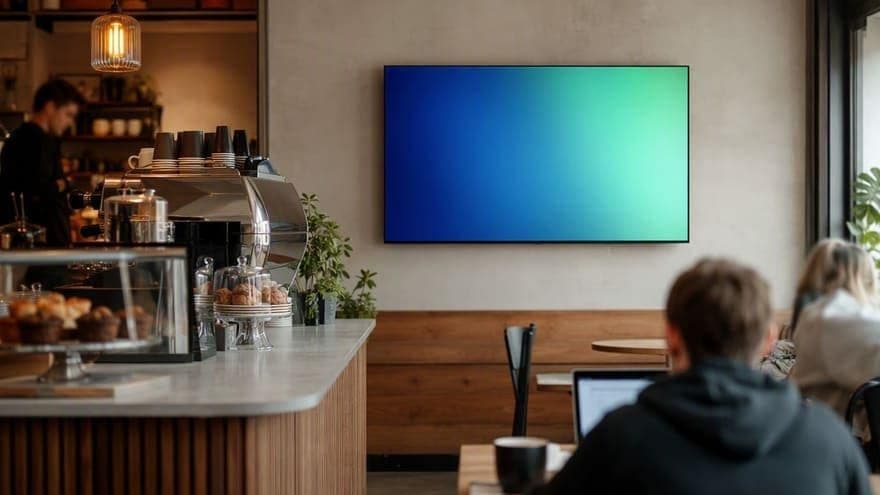
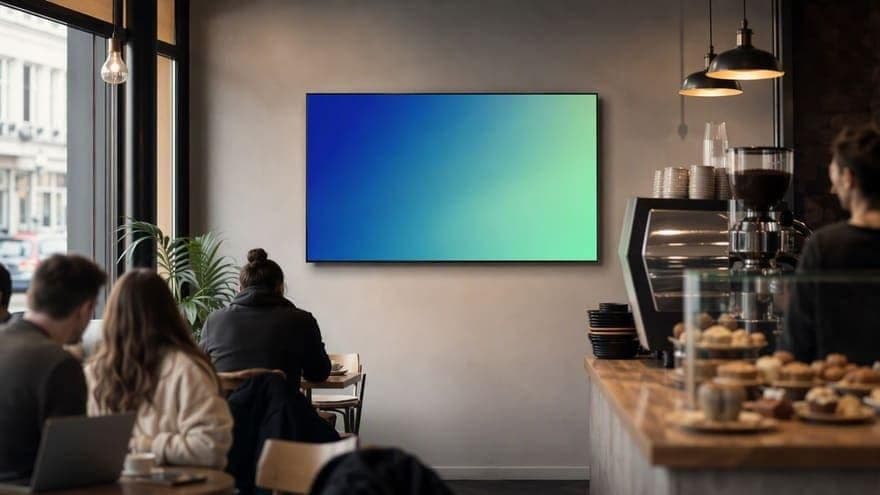
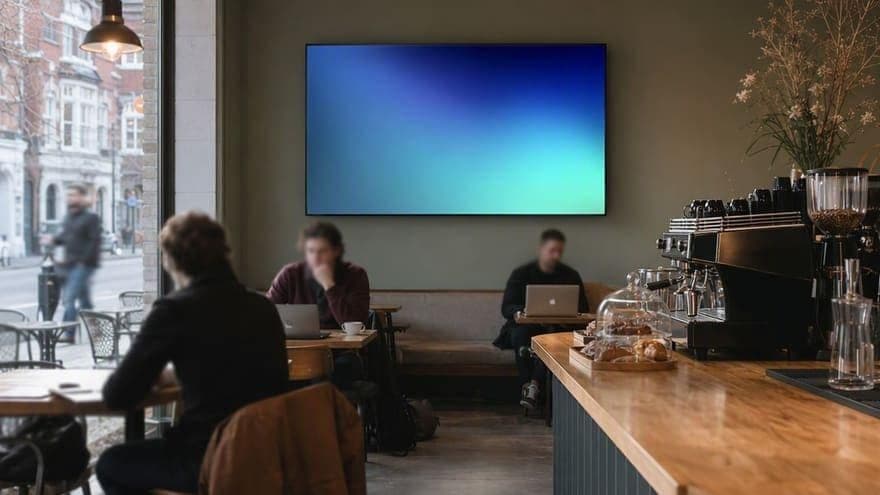
The kind of room your advert lands in.
The screen in each of these is the real DisplayCircle player, laid over the television in the photograph.

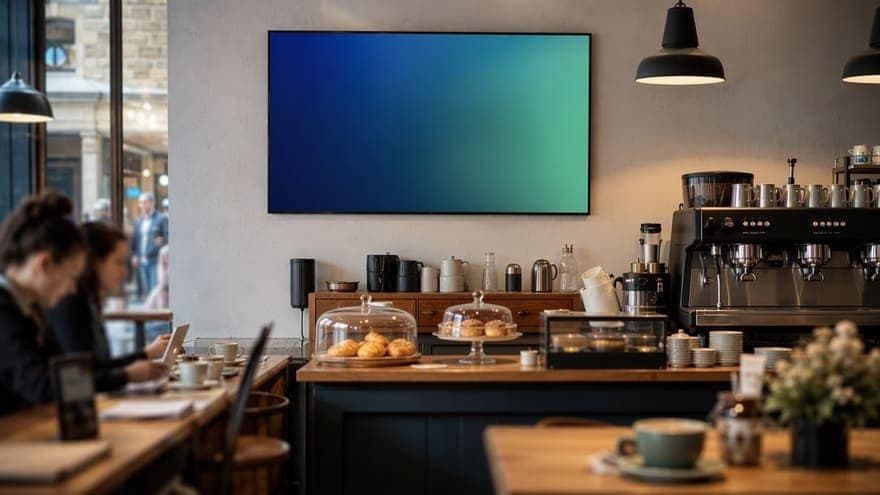
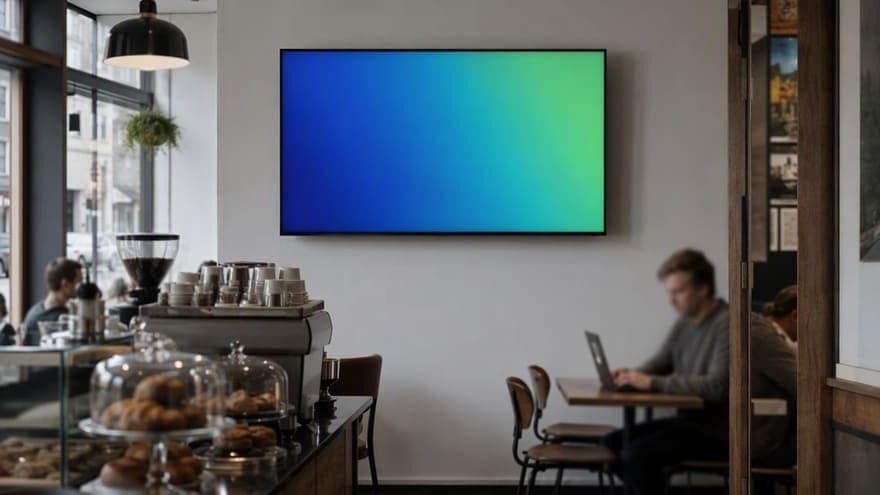
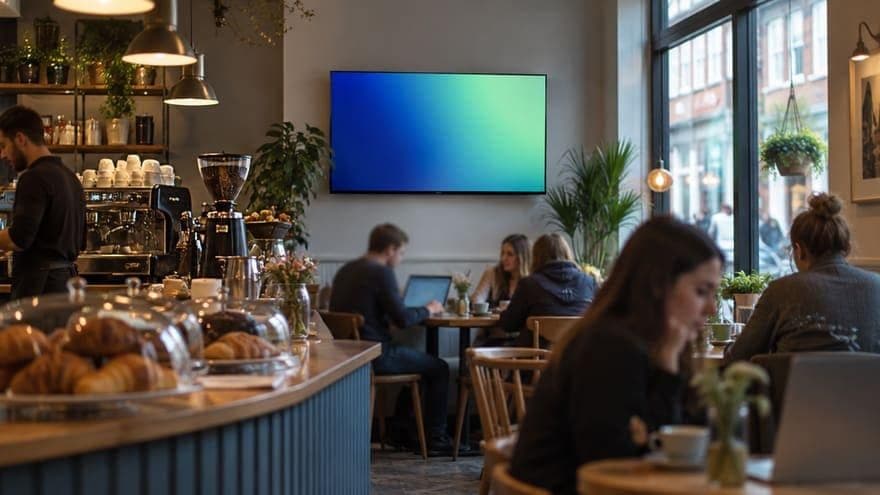
Proof-of-Display
You are never charged for a play the screen cannot prove.
Every advert carries a signed, single-use token. The credit moves only if that token comes back with a believable duration and a live heartbeat showing the screen was awake and in view for the whole play. A television switched off at the wall earns its owner nothing and costs you nothing.
How verification worksSigned play tokens
Single use, time limited, tied to that screen and that campaign.
A live heartbeat
The screen reports in while your advert is on it, or the play does not count.
A believable duration
Plays outside the expected length of your creative are rejected.
An auditable ledger
Every credit that moved, with the screen and the date behind it.
Questions
What housebuilders and new developments ask.
How is this different from the estate agents page?
An agent sells many homes across a town; a developer sells one site to the catchment around it, usually around a launch. The buying tools are the same, the targeting is different.
Can we show computer-generated images of the homes?
Yes, labelled as you normally would. Owners approve each advert before it plays.
Can it run only in the evenings?
A campaign plays whenever its screens are on, not by the hour. Choose venues busy when your buyers are about — gyms and pubs in the evening, cafés and supermarkets at weekends.
Another kind of advertiser?
Ready?
Your first campaign could be running tonight.
Make the poster, pick the screens off the map, set a budget. You are charged only for plays the screens can prove.